
Cold-Chain Logistics & Reefer Container Technology: The 2026 Playbook for Frozen Seafood Exporters
Every degree matters. The Food and Agriculture Organization (FAO) estimates that up to 35% of seafood is wasted globally due to inadequate post-harvest handling and cold-chain failures. A joint FAO and Bay of Bengal Programme study found that 25 to 35 million tonnes of fish are lost every year, with losses reaching 20–60% of the total catch across Asian value chains and as high as 75% in some developing regions. For B2B seafood exporters and importers, these numbers translate directly into revenue leakage, rejected shipments, and eroded buyer trust.
Yet the cold-chain landscape is shifting fast. In 2025–2026, reefer container fleets crossed 850,000 TEU globally (Drewry), IoT-enabled monitoring became a baseline expectation, and regulatory pressure from the IMO and EU forced a wholesale move toward low-GWP refrigerants. This article breaks down the technology, market data, and sourcing strategy that frozen seafood exporters need to navigate the 2026 cold-chain environment.
The Scale of the Problem: Seafood Loss in Numbers
The FAO/BOBP-IGO study, conducted during 2025–26 across 11 Asian countries, identified 43.5% of losses occurring at landing sites due to inadequate icing facilities and high ambient temperatures. The cold-chain gap is not just a developing-world problem — it is a global supply-chain bottleneck. The International Institute of Refrigeration (IIR) notes that proper cold-chain management can reduce food losses by 15–20% globally, while Norway and Iceland have driven post-harvest losses below 5% through full traceability, high-value processing, and total biomass utilization.
| Region / Market | Post-Harvest Loss Rate | Primary Loss Driver | Traceability Maturity |
|---|---|---|---|
| Developing Asia (avg.) | 20–60% | Inadequate icing at landing sites | Low / fragmented |
| Sub-Saharan Africa | 20–35% | Missing cold storage infrastructure | Low |
| EU / North America | 5–12% | Transit-handling excursions | High (HACCP / FSMA 204) |
| Norway / Iceland (benchmark) | < 5% | Minimal — full traceability | Full chain-of-custody |
The contrast is stark. Markets that invest in end-to-end cold-chain infrastructure — from onboard RSW (refrigerated seawater) systems through reefer container telemetry to warehouse FIFO discipline — achieve loss rates five to ten times lower than those that do not. For a B2B importer sourcing frozen tilapia or pangasius, the supplier’s cold-chain maturity is a direct proxy for product quality and shelf-life predictability.
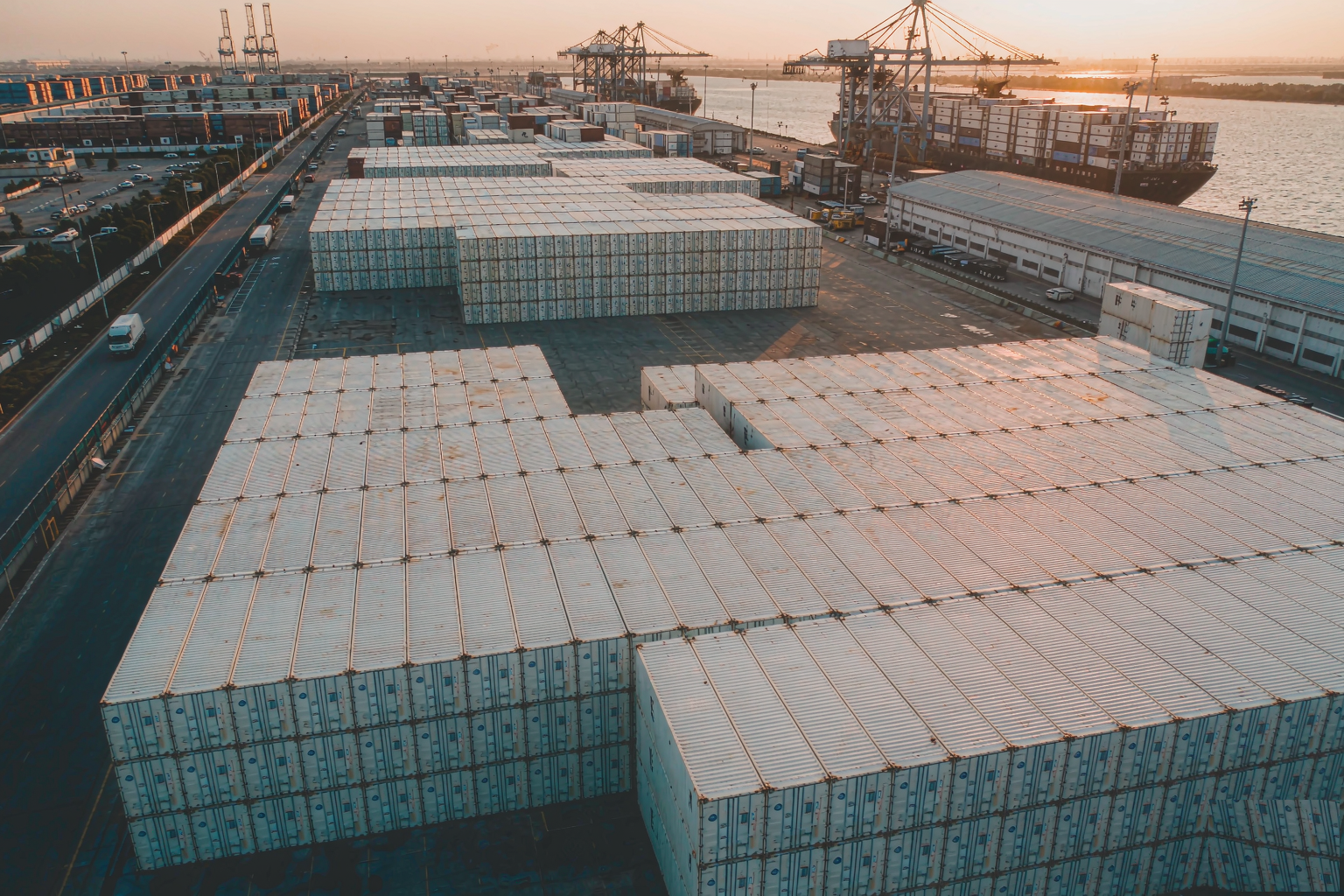
Reefer Container Market: Size, Fleet, and Capacity in 2026
The global reefer container fleet reached 850,000 TEU in 2025, a 4.2% increase driven by record new-build deliveries (Drewry Maritime Research, January 2026). The broader reefer container fleet market is projected to grow from USD 2.06 billion in 2025 to USD 3.05 billion by 2031 at a 6.5% CAGR, while the refrigerated sea containers market tracks at USD 1.58 billion (2024) with a 4.7% CAGR through 2034.
According to DHL’s 2026 Ocean Freight Reefer Market Update, global reefer demand is growing at approximately 3% in 2026, supported by population growth, food demand, and the continued modal shift of temperature-sensitive shipments from air to ocean freight. Reefer plug capacity increased 3.4% year-over-year, yet effective capacity remains constrained by port congestion, vessel rerouting, and equipment imbalances — pushing reefer freight rates 7% higher year-over-year and 4% above Q1 2026 levels.
| Metric | 2025 Figure | 2026 Trend | Source |
|---|---|---|---|
| Global reefer fleet | 850,000 TEU (+4.2%) | Continued fleet expansion | Drewry, Jan 2026 |
| Reefer demand growth | ~3% annual | Stable, tariff-sensitive | DHL, 2026 |
| Reefer plug capacity | +3.4% YoY | Constrained by congestion | DHL, 2026 |
| Reefer freight rate change | +7% YoY | Rates firm, surcharges rising | DHL, 2026 |
| IoT-enabled containers | ~54% of fleet | 25% target by 2026 | DCSA / market reports |
| Seafood share of reefer app. | 29% (marine products) | Most demanding segment | BRI Market Report |
Reefer container operations typically carry 40–60% higher transportation costs than dry containers — a reflection of energy consumption, specialized handling, and maintenance complexity. A 40-foot reefer from Asia to North America runs approximately USD 8,000–12,000, and geopolitical disruptions via the Cape of Good Hope route have pushed spot rates even higher on select lanes. For frozen seafood exporters, these cost pressures make cold-chain efficiency a margin-critical discipline, not a back-office detail.
Technology Shift: IoT, Telematics, and Low-GWP Refrigerants
The most consequential change in 2026 is the shift from reactive to predictive cold-chain management. Three technology waves are converging:
1. IoT Telematics Becoming Baseline. The Digital Container Shipping Association (DCSA) published its IoT Data Standard for Remote Reefer Container Monitoring in 2020, and by 2025–2026 the focus shifted from specification to large-scale deployment. Carrier Transicold’s Lynx Fleet platform, SeaCube’s telematics-ready fleet, and similar systems now deliver continuous monitoring of temperature performance, equipment health, and cargo conditions throughout each voyage. The global cold-chain telematics market is projected to reach USD 10.28 billion by 2034, and telematics capability is increasingly viewed as a baseline expectation rather than a competitive differentiator.
2. Low-GWP Refrigerant Transition. The IMO’s phase-down of high-GWP refrigerants such as R-404A (to below 1,500 GWP by 2027) and the EU F-Gas Regulation’s tightening HFC quotas from 2025 onward are forcing fleet-wide upgrades. Maersk Container Industry is transitioning its Star Cool line to R1234yf, a low-GWP alternative. Compact CO₂-based systems are gaining traction for their safety and energy efficiency, and propane (R-290) is being explored in tropical-region vessels. Approximately 44% of newly manufactured reefer containers now use low-emission refrigerants.
3. Energy Efficiency and Smart Airflow. New-generation reefer models consume 20–40% less energy than decade-old units, driven by variable-speed compressors, improved insulation, and automated airflow management. Automated airflow systems have improved cargo preservation efficiency by approximately 26%, and smart reefer systems reduced cargo damage rates by nearly 28% across long-distance shipping routes.
What This Means for Frozen Seafood B2B Sourcing
For importers and distributors sourcing frozen tilapia, pangasius, or whitefish from China and Southeast Asia, the cold-chain equation has three practical implications:
Supplier qualification now includes cold-chain audit. A supplier’s reefer container partnership, warehouse temperature logging, and IoT traceability are as important as certification status (HACCP, BAP, ASC). Buyers should request documented temperature records for the full voyage, not just the loading and arrival snapshots. Under the U.S. FSMA 204 rule, detailed recordkeeping and fast data retrieval are now mandatory — smart containers with blockchain-verified logs provide instant compliance.
Freight rate volatility is structural, not temporary. With Middle East rerouting, elevated bunker costs, and Section 232 tariff uncertainty in the U.S. market, reefer rates are expected to stay firm through 2026. Importers should build 7–10% freight cost contingency into landed-cost models and consider consolidating shipments to optimize container utilization.
Product specs must align with cold-chain capacity. IQF (Individually Quick Frozen) products, with their uniform piece size and fast-freeze texture preservation, are better suited for long reefer voyages than block-frozen product. NEGUPGROUP offers both IQF and block-frozen formats across its product lines, allowing buyers to match packaging to transit duration and destination infrastructure.
NEGUPGROUP Product Specifications
| Product | Size Grade | Packaging | Freezing Method |
|---|---|---|---|
| Frozen Tilapia Whole Fish | 300–500g / 500–800g / 800g+ | 10kg / carton | Block frozen / IQF |
| Frozen Tilapia Fillet | 3–5oz / 5–7oz (skin-on / skinless) | 5kg / carton | IQF |
| Frozen Pangasius Fillet | 3–5oz well-trimmed | 10kg / carton | IQF / Block frozen |
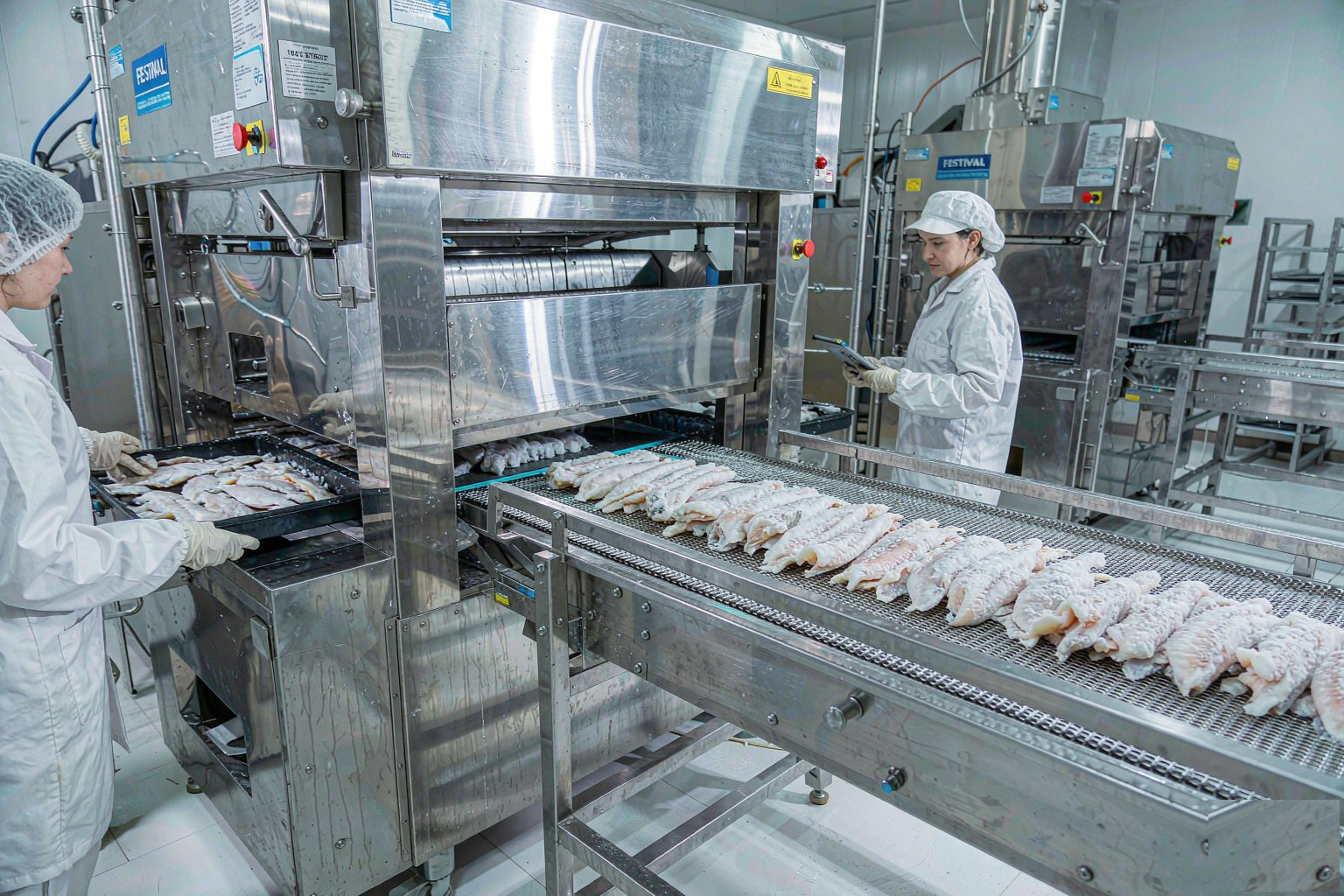
All NEGUPGROUP frozen seafood products are processed under HACCP-certified facilities, with full traceability from farm to container. Our cold-chain protocol includes pre-chilled loading, continuous temperature logging during transit, and arrival verification — ensuring that every carton arrives at specification, whether the destination is the Middle East, Africa, Latin America, or Europe.
Download the Cold-Chain Sourcing Brief
Get our printable one-page brief covering reefer container specifications, temperature standards, and a B2B cold-chain audit checklist for frozen seafood sourcing.
Conclusion: Cold-Chain Discipline Is Margin Protection
The 2026 cold-chain environment rewards disciplined operators. With 35% of global seafood still lost to cold-chain failures, every percentage point of improvement is direct margin preserved. The technology stack — IoT telematics, low-GWP refrigerants, smart airflow, and blockchain traceability — is maturing and becoming affordable. The regulatory framework — IMO refrigerant phase-down, EU F-Gas Regulation, U.S. FSMA 204 — is tightening the floor for compliance. And the freight market — with reefer rates 7% higher year-over-year and capacity constrained — is pushing shippers toward consolidation and efficiency.
For B2B buyers of frozen tilapia and pangasius, the sourcing decision is no longer just about price per kilogram. It is about whether your supplier can deliver a fully documented, temperature-verified cold chain from processing plant to your warehouse dock. NEGUPGROUP’s HACCP-certified processing, IQF and block-frozen format flexibility, and full-chain traceability make us a reliable partner for the 2026 cold-chain environment.
Contact NEGUPGROUP Seafood Team
Ready to source frozen tilapia and pangasius with a cold-chain-verified supply chain?
- Request Quotation — Get competitive FOB / CIF pricing for your target market.
- Ask for Samples — Evaluate product quality before placing a bulk order.
- Check Product Specifications — Detailed size grades, packaging, and freezing methods.
- Contact NEGUPGROUP Seafood Team — WhatsApp +86 13360658417 | [email protected] | www.negupgroup.com
Keyword Tags
Frozen Tilapia Whole Fish |
Cold Chain Logistics |
Reefer Container |
Frozen Pangasius Fillet |
IQF Seafood